
Home › Expert Services ›
Acceptance inspectionAcceptance inspection
Independent inspection of new wind turbines after commissioning

A new wind turbine is handed over by the manufacturer. Whether it has been built as specified, fully documented and is free of assembly damage only becomes apparent on close inspection. The acceptance inspection after commissioning therefore takes an independent look at the turbine — on behalf of the operator or investor, following the principles of the BWE expert advisory board.
We inspect on three levels: the documentation, the requirements arising from permits and type approval, and the turbine itself — from the foundation via tower and nacelle to rotor blades, controls and safety systems. Every finding is classified, backed by a photo and recorded in a report for each turbine.
What has to be considered in the acceptance inspection?
We check the serviceability of the turbine: defects and deviations from good engineering practice as well as deviations from the agreed scope of supply and services under the contract for work.
The basis is the principles for periodic inspections of the BWE expert advisory board, supplemented by the standards and rules of the type approval — from IEC 61400 via the Eurocodes to the DIBt guideline.
Objective of the acceptance inspection
The objective is an independent picture of the condition of the new turbine before it passes to the operator: detecting defects early, assigning them to the responsible party and tracking their rectification.
What do we inspect?
Documentation
Type approval, permits, CE conformity, maintenance documents, manufacturer certificates, commissioning records and the turbine logbook are checked for completeness and plausibility.
Permit and type-approval requirements
We verify that conditions and requirements have been implemented — for example sound power measurement, shadow flicker and bat curtailment and obstruction lighting.
Foundation and tower
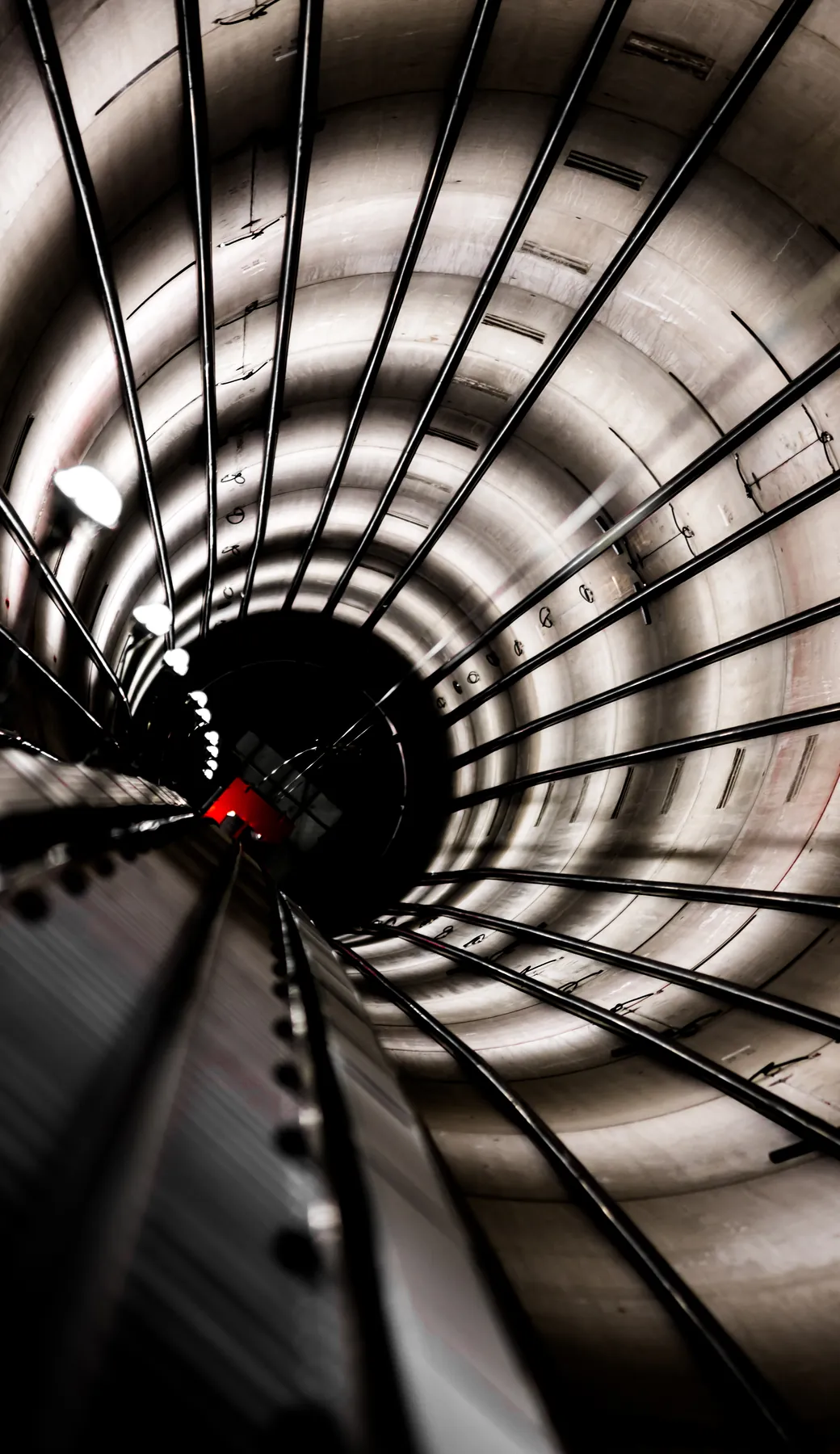
Close-range visual inspection of foundation, ground cover and earthing connection; tower shell inside and out, bolted connections, entry and fall protection.
Nacelle, hub and rotor blades
Inspection from the yaw bearing to the pitch system. The rotor blades are flown at close range by drone to rule out handling and assembly damage.
Controls, electrical systems and safety
Function test of control and safety systems, visual inspection of switchgear, medium-voltage equipment and external lightning protection, comparison of nameplates and serial numbers.
Report and punch list
A report per turbine with classified findings and photo documentation. From this we derive a punch list with responsibility and status for each item.
Every finding is classified
We assess according to the four-level defect classification of the BWE expert advisory board with clear time frames. Everyone involved knows immediately what has to happen now and what is monitored until the next inspection.
-
Class 1
No or very minor damage: monitor and reassess at the next inspection.
-
Class 2
Minor damage with no effect on function: rectify within 6 to 12 months.
-
Class 3
Considerable defect in the structure or component: rectify within 1 to 6 months.
-
Class 4
Safety-relevant damage: rectify as soon as possible, shut down the turbine.
How the acceptance inspection proceeds
-
Preparation from the documents
Before the on-site appointment we review the contract, type approval, permits and commissioning documents. From these we derive checklists that are tailored individually to the turbine-specific requirements.
-
Inspection on site
Visual inspection of the turbine from the foundation to the rotor blades, function test of controls and safety systems, drone flight of the rotor blades and comparison of markings — every inspection point with a photo. Accompaniment by a manufacturer technician is possible, but not required.
-
Report per turbine
A report is prepared for each turbine. If necessary, open items are compiled in a punch list for easy follow-up.
Good to know
Scope limit
The acceptance inspection does not replace the inspection of the electrical installation by a recognised expert in accordance with DGUV Regulation 3.
Requirements
Wind up to 7 m/s at hub height, no precipitation, above 5 °C — and the complete documents about one week before the appointment.
Add-ons
Additional work such as measuring the relative blade pitch angle error, oil or grease sample analysis, earth resistance and lightning continuity measurement, vibration measurement and gearbox endoscopy is agreed individually with our customers.
Your benefit
Independent
We inspect on behalf of the operator or investor — with no interest in manufacturer or installer.
Traceable
Standards and rules are named in the report; every finding is backed by a photo and its position.
Usable
Reports with revision status and signatures stand up with authorities and insurers and provide the basis for defect claims.
From practice
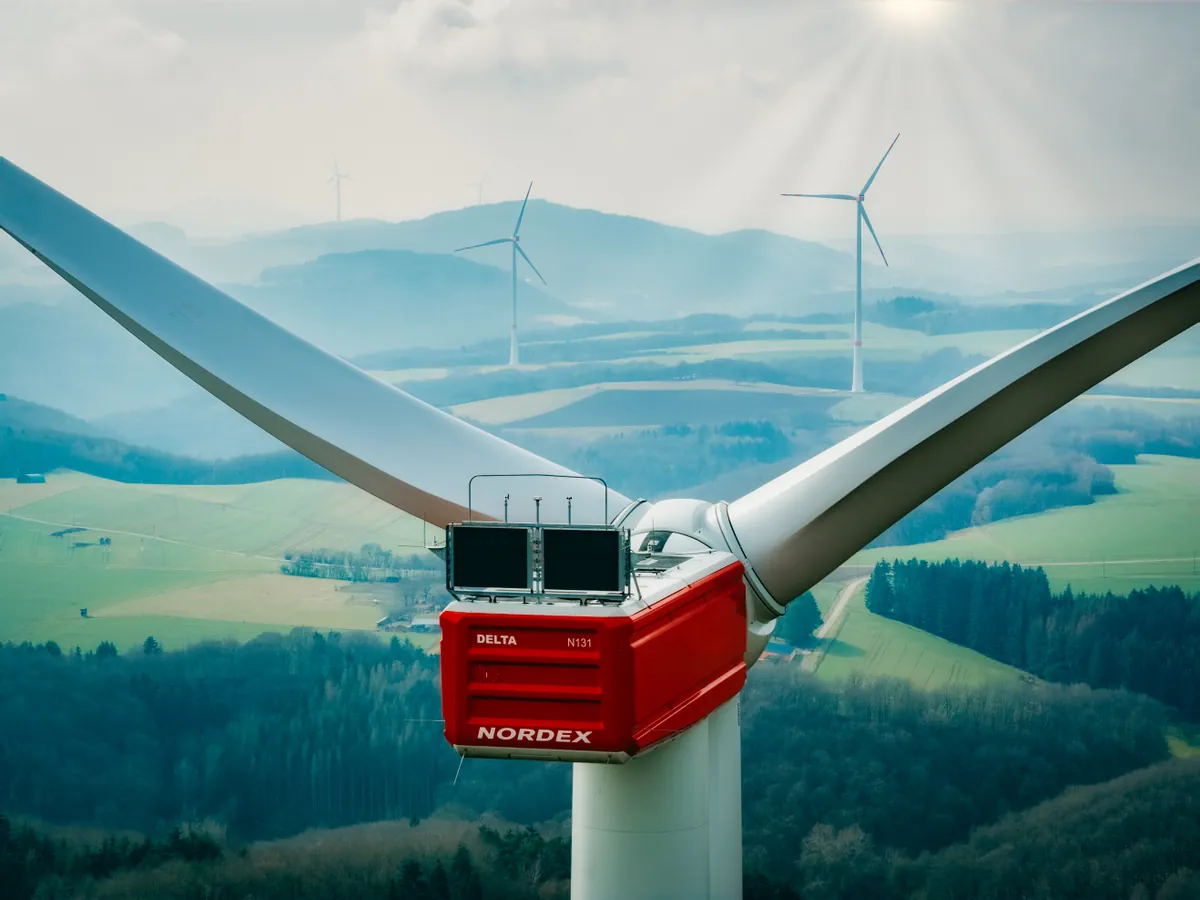
Modern wind turbines — for example those of the Nordex Delta4000 platform (N163/6.X) or the Enercon E-160 EP5 — reach hub heights of more than 160 m; the N163/6.X with a 164 m hybrid tower. Their complex design involves numerous points that need to be independently verified before acceptance — so that owners and operators face no unpleasant surprises in operation. From leaks to faulty software configurations, we build an independent and detailed picture of your turbine before it is handed over to you.
Also interesting
Recurring Inspection (WKP)
Every 2–4 years: structural safety inspection by an accredited Type C inspection body.
Drone Inspection
High-resolution drone inspection for cost-effective and precise assessments.
Lifetime Extension & Stability
Stability reports and lifetime extension for existing wind turbines.
FAQ: Lightning Protection
Procedure, protocols and standards for lightning protection measurements on WEA.