

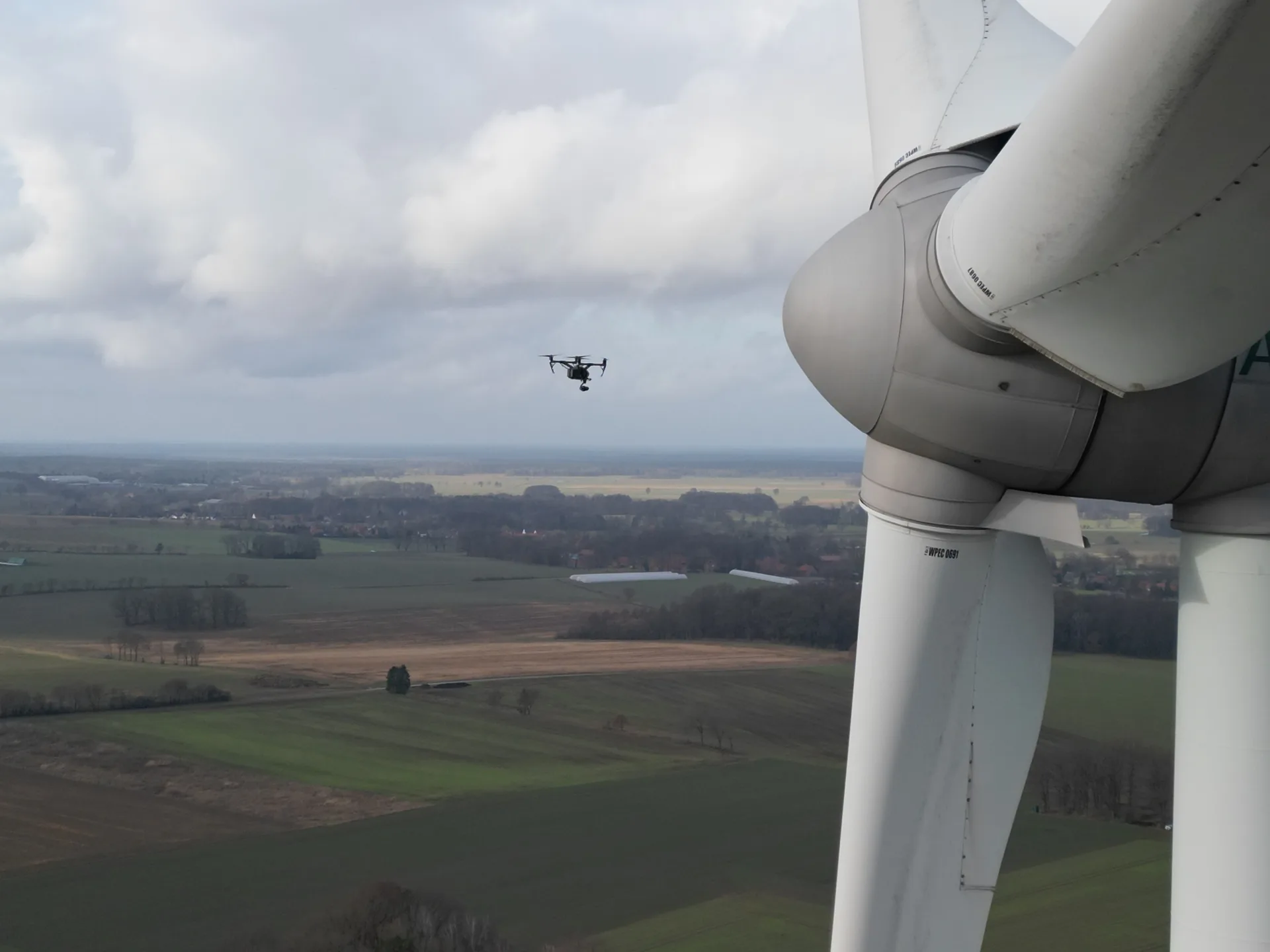
Drone Inspection of Wind Turbines (WTG)

Regular inspections of your turbines and wind farm are essential — yet they are often time-consuming, risky, and above all a costly drain on resources. With the right application of innovative technology, these challenges can be effectively resolved.
Turn important inspections to your advantage with our service solutions and our small but capable tool: the drone.
Your Benefits at a Glance:
- Cost-effective alternative to elevated platforms or rope access
- Fast and precise damage detection, even in hard-to-reach areas
- High-resolution imaging — even minor damage becomes visible
- Documentation and reporting for insurers and authorities
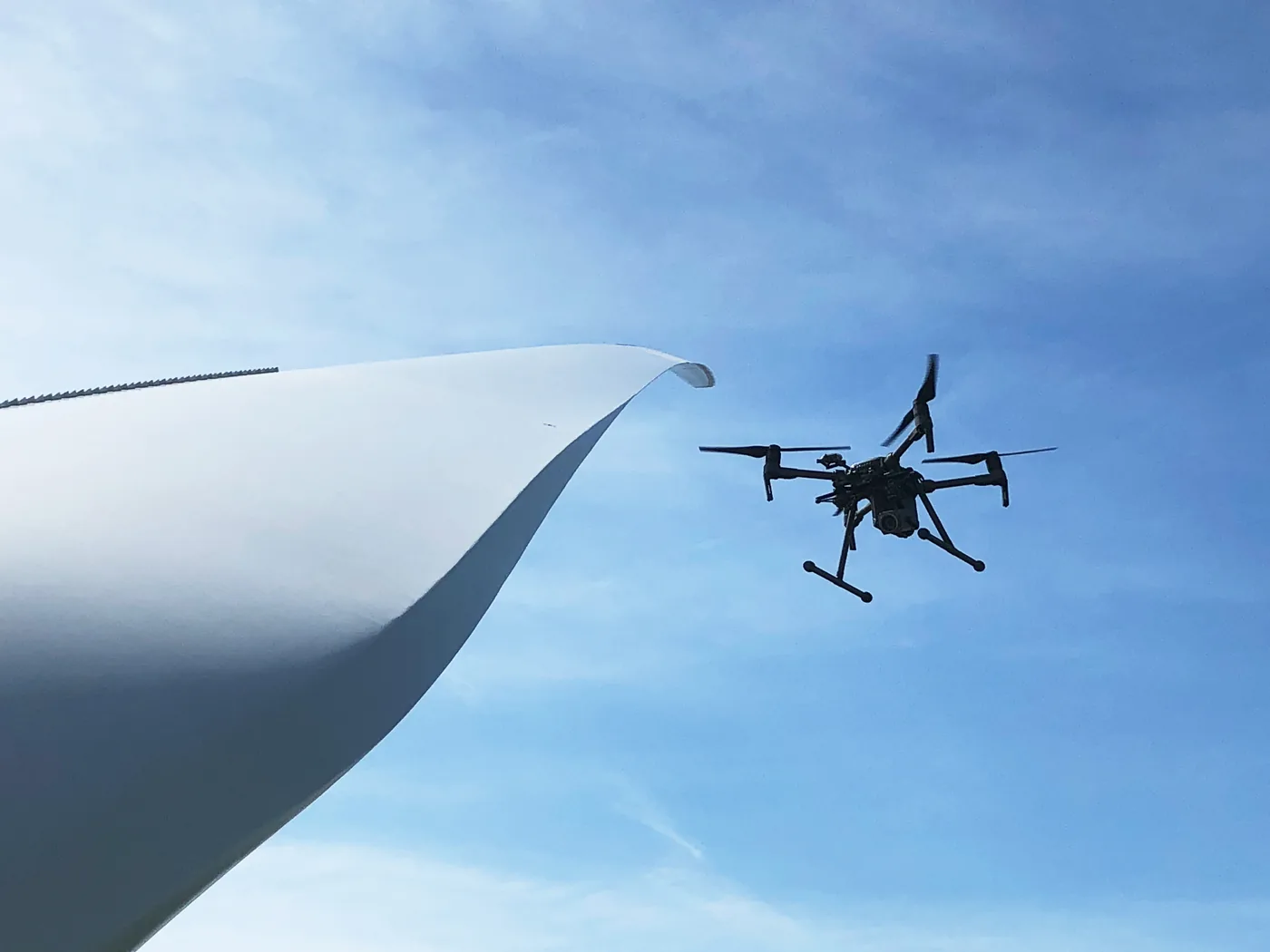
Our Services for You:
Request a Drone Inspection
Get in touchTypical Damage Patterns
Early detection significantly reduces repair costs and extends turbine service life.
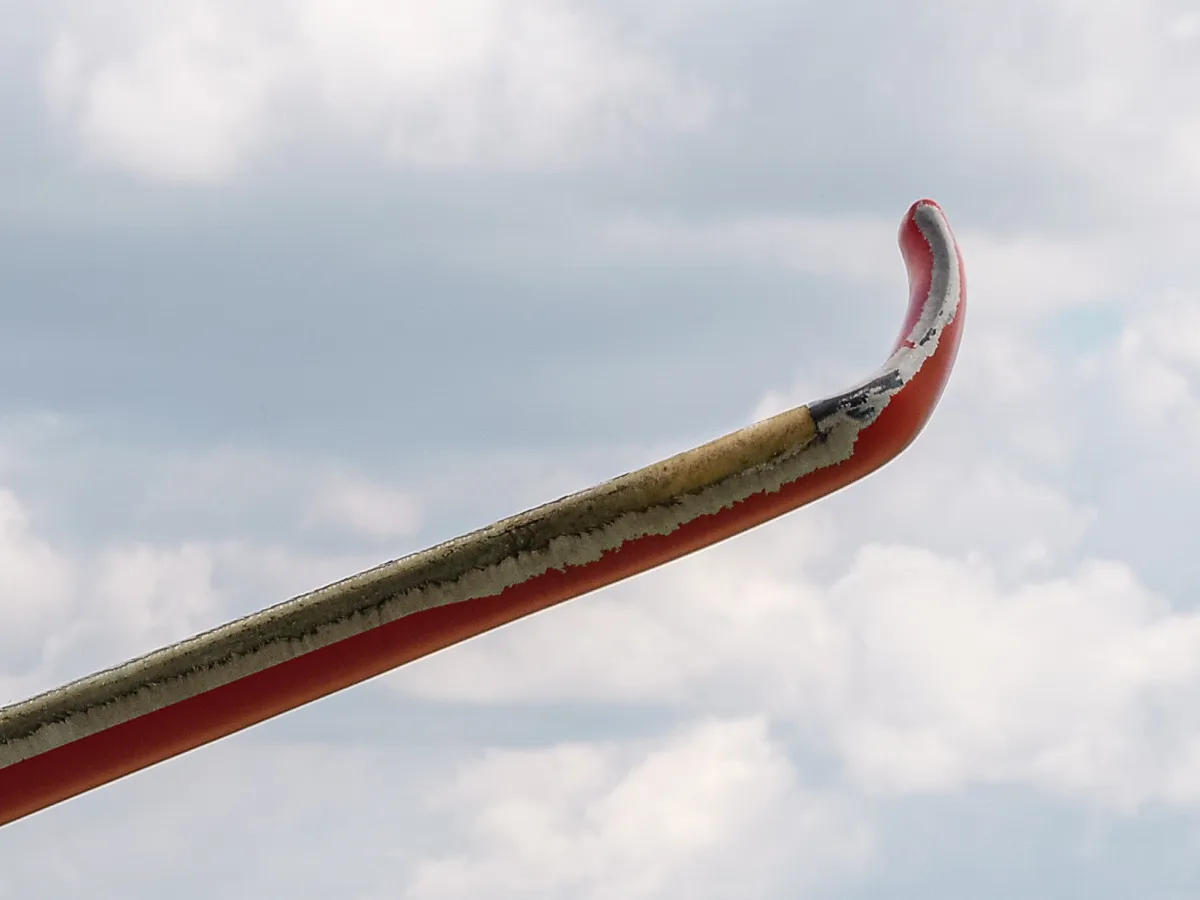
Leading Edge Erosion
Abrasion caused by rain, hail, and insects measurably reduces aerodynamic efficiency. Detected early, targeted protective measures can significantly limit the damage.

Blade Tip Wear
Mechanical stress from rotation and wind loads causes micro-cracks and material loss at the exposed blade tip — with a direct impact on aerodynamic performance and energy yield.
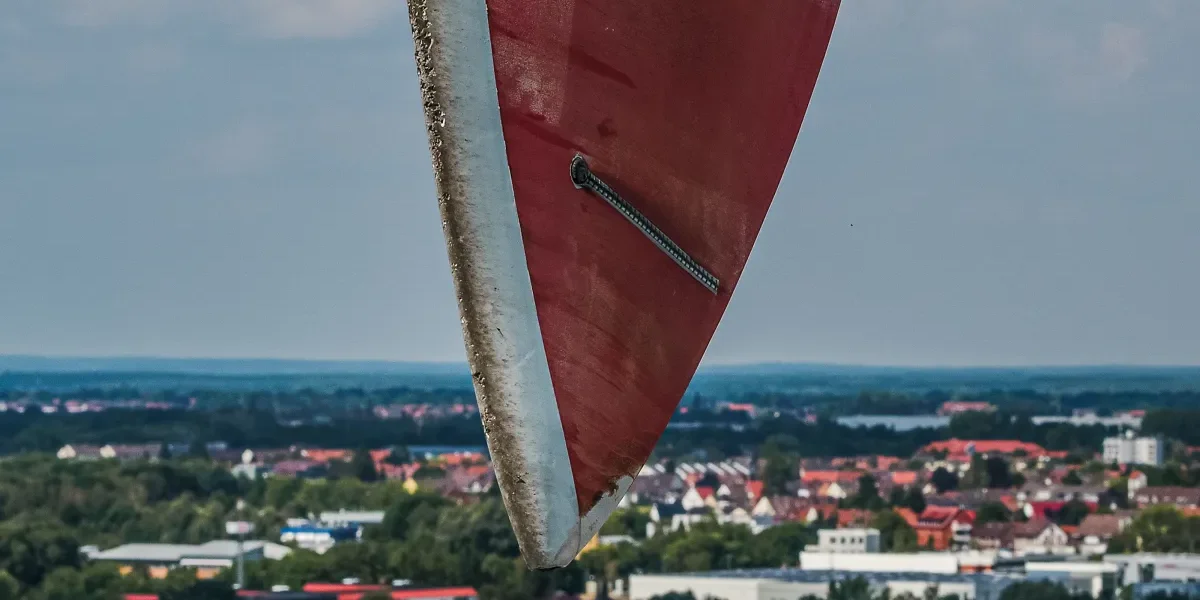
Consequences of Lightning Strikes
Damaged lightning receptors or conductor systems often go undetected without regular inspection — until the next strike causes costly structural damage.
Advantages of WTG Drone Inspection Compared
| Elevated Platform | Rope Access | Drone | |
|---|---|---|---|
| Cost | Very High | High | Low |
| Time Required | Half to Full Day | Several Hours | A Few Hours |
| Risk | Elevated | Elevated | Minimal |
| Accessibility | Limited | Good | Good |
Tower Inspection
Using state-of-the-art drone technology — including DJI systems with high-resolution Zenmuse cameras such as the Zenmuse Z30 (30× optical zoom) — regular drone inspection in the sense of predictive maintenance enables early detection of damaged areas on all externally visible components. Damage is documented in detail and at close range, allowing fast and effective assessment and follow-up — without rope access, cranes, or elevated platforms.
Lightning Protection System Inspection
Due to their exposed location, wind turbines are particularly susceptible to lightning strikes. In accordance with DIN EN 62305 and applicable operator standards, the lightning protection system of a wind turbine must be inspected regularly — typically every one to two years. Lightning receptors in the rotor blades and the conductor systems in the tower are especially critical inspection points.
Drone inspection offers a fast, cost-effective, and safe alternative to conventional methods: high-resolution cameras detect damage to lightning receptors, corrosion on conductor systems, and structural anomalies on rotor blades — without rope access or elevated platforms. This allows the statutory inspection requirement to be fulfilled efficiently and with full documentation.
Also interesting
Recurring Inspection (WKP)
Every 2–4 years: structural safety inspection by an accredited Type C inspection body.
Lifetime Extension & Stability
Stability reports and lifetime extension for existing wind turbines.
FAQ: Lightning Protection
Procedure, protocols and standards for lightning protection measurements on WEA.